Indoor Pickleball Balls

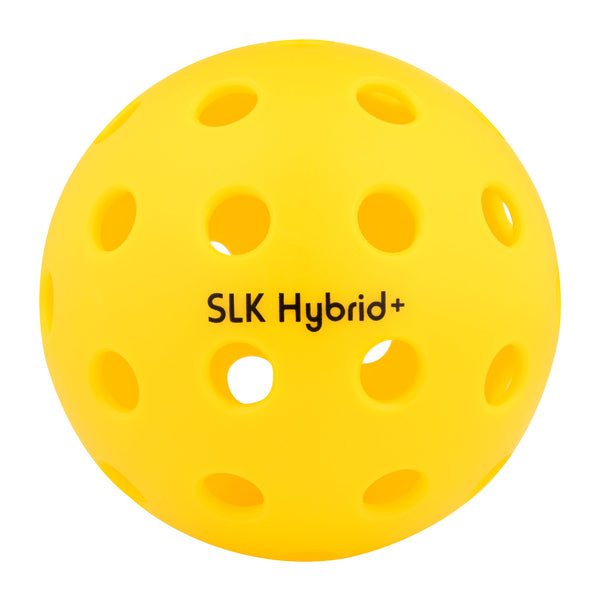
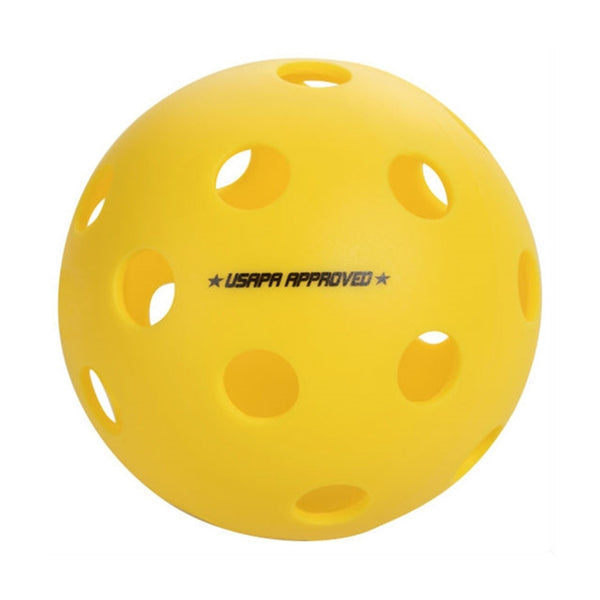
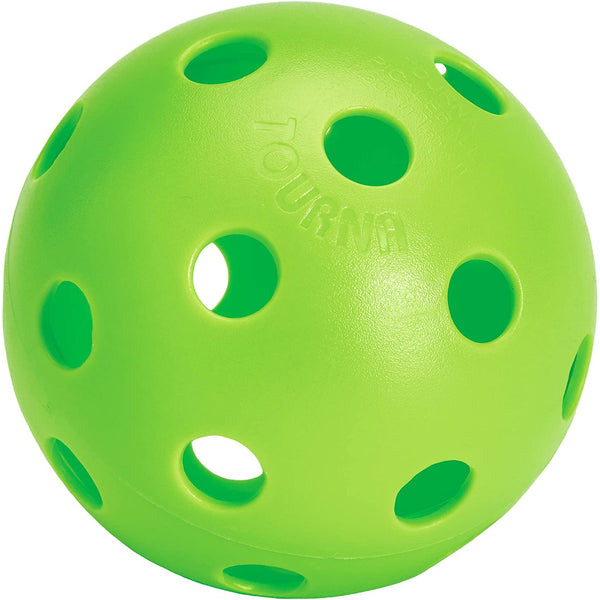
Indoor pickleballs are built for gym floors and indoor courts. The 26-hole design and soft plastic body produce a steady flight and a predictable bounce - tuned for the long, placement-focused rallies that define indoor play.

Indoor pickleball is its own version of the sport - slower, more tactical, and built around the ball as much as the paddle. Indoor balls have 26 larger holes and a softer plastic shell, which together slow the ball down, smooth its flight path, and reward placement over pace. Rallies last longer. Dinks and soft shots at the kitchen line carry more weight.

These balls are tuned for gym floors, hardwood, and dedicated indoor sport surfaces - the kind of courts that fill community centers and church gyms through the winter months. Unlike outdoor balls, indoor balls don't usually crack; they soften and lose their shape gradually, so you'll know it's time to replace one when the bounce starts feeling flat. Most rec players keep two or three in their bag and rotate as they wear in.

Indoor Pickleball Balls FAQs

It's about airflow. Indoors, there's no wind to fight, so the ball doesn't need 40 small holes to keep its line - 26 larger holes do the job and give the ball a softer, slower feel. The larger holes let more air pass through during flight, which slows the ball down, makes rallies longer, and rewards placement over pace. This is why indoor games tend to look more strategic - the ball gives you time to set up the next shot.

Longer than outdoor balls, in most cases, but in a different way. Indoor balls don't usually crack. Instead, the softer plastic gradually loses its shape and gets mushy after repeated heavy hits, which kills the bounce and makes the ball feel dead off the paddle. For rec players, an indoor ball can last months of regular play. Once it starts feeling soft or doesn't bounce predictably, replace it - you'll feel the difference immediately.

Indoor balls are tuned for gym floors and dedicated indoor pickleball courts - usually hardwood, synthetic sport surfaces, or polished concrete. The softer plastic and larger holes are calibrated for those surfaces, where the ball needs to play controlled and predictable. If you're playing indoors on a converted tennis court (acrylic hard court surface), you can use either type - outdoor balls often play better on that specific surface because they're tuned for that level of bounce.

Hybrid balls sit between indoor and outdoor specs and work reasonably well in both settings - useful if you split your time between gym courts and outdoor play, or want one ball to grab on the way out the door. The trade-off is that a hybrid isn't optimized for either. If you play indoors most of the time, a true indoor ball gives you the right speed, bounce, and feel. Hybrid is a convenience choice; dedicated indoor is a performance choice.

Recently viewed