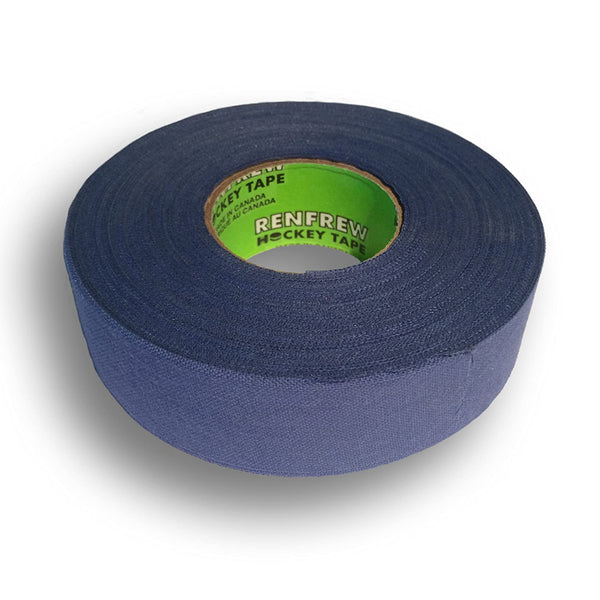
Hockey Tape

Cloth stick tape, clear shin pad tape and stretch grip tape for ice, street and roller hockey, in single rolls and team case packs. Each type does a different job, and the guide below the products explains which tape goes on the blade, which goes on the handle, and which holds your socks up.

Three tapes, three jobs

Hockey tape isn't one product. A full tape setup uses three different tapes, and swapping them around rarely works well. Everything here is from Renfrew, the tape brand USA Hockey has used as its official tape for more than a decade.

Cloth stick tape is the classic blade and handle tape: a polyester/cotton cloth backing with a strong adhesive. On the blade, it gives the puck something to grip, softens hard passes coming onto the stick, and protects the blade from skate cuts, ice and slashes. A bare composite blade feels slick and hard, and the puck tends to skip off it. On the handle, the same tape adds grip and builds the knob at the top of the stick.

Clear shin pad tape is a stretchy polyethylene tape made to hold socks and shin guards in place. It stretches as the leg flexes and pulls back to hold tension, so it stays snug through a full game without cutting off circulation. It's waterproof, tears by hand, and the clear finish disappears on any team's sock color. Cloth stick tape is the wrong tool here. It has very little stretch, so it can't flex with the leg the way shin pad tape does: wrap it loose and it slides, wrap it tight and it squeezes the calf. Clear tape also works as a backup when the hook-and-loop tabs or garter holding the socks up start to wear out.

Grip tape is a cohesive tape. There's no adhesive on it. It sticks only to itself, tears by hand, and unwraps clean without leaving residue on the shaft. Players use it to build a softer, tackier handle or a cushioned knob, either on its own or wrapped over cloth tape. It works on other sports handles too.

Width and roll length

24mm (about 1 inch) is the most popular width and what most players use for both the blade and the handle. 36mm (about 1.5 inches) covers the blade in fewer wraps with less overlap, and some players prefer that cleaner, flatter finish. Auston Matthews is one of them, covering nearly his whole blade with 1.5-inch tape.

Split tape is narrow cloth tape, made by tearing or cutting standard tape down the middle or bought as a pre-scored roll that splits into strips. It's a handle-and-knob tape, not a blade tape. Players use it three main ways:

  • Skinny knob: wrap a narrow strip around and around at the very top of the shaft to build a thin, firm knob that a pinky finger can hook over.
  • Twisty or candy cane grip: twist a strip into a rope-like cord and wrap it in a spiral down the handle, then cover it with tape. The raised ridges give the glove extra traction.
  • Finishing work: lock down the base of a grip, make X-patterns at the butt end, or seal the edges of a wider layer of grip tape.

Roll lengths are listed in both metric and yards, and they aren't the same thing. A 25m roll is about 27 yards, roughly 10% more tape than a 25-yard roll. An 18m roll is about 20 yards, and a 50m roll is about 55 yards. Shorter rolls are easy to keep in a bag. Longer rolls cost less per foot for players who retape often.

Black, white, or color

Black versus white is hockey's oldest gear debate. The case for black: it's said to make the puck harder for a goalie to pick up on the blade. The case for white: it gives the puck carrier better contrast and shows wear, so you can see when it's time to retape. Most goalies say color makes no real difference, and in practice the choice usually comes down to habit and superstition. Wayne Gretzky taped black; Auston Matthews tapes white.

Colored, patterned and NHL team tapes are the same cloth tape with a printed or dyed backing. They're popular for matching team colors, for youth players, and for causes like Hockey Fights Cancer purple. At the IIHF and NHL level, tape of any color is allowed anywhere on a player's stick. The one exception in the NHL is the goalie knob, which has to be white.

Taping the blade and building a knob

Many players tape heel to toe, overlapping each wrap by about half the tape width. Hockey tradition says heel to toe adds spin to the puck and toe to heel releases it slightly faster, but that's player lore, not physics. A full wrap protects the whole blade. A toe-only or partial job saves tape and weight but leaves the heel exposed. Finish with stick wax to seal the tape against snow and water.

For a standard knob, wrap the top of the handle until the knob fills your hand: a common test is that your pinky should wrap around it comfortably with gloves on. Players who want a thinner knob or a ridged grip build it with split tape (see above), and grip tape over cloth tape gives a softer, tackier feel.

Street and roller hockey

Tape behaves differently off the ice. On asphalt and sport court, tape on the bottom of the blade drags and wears through fast, so many roller players put strips only on the face of the blade instead of wrapping it. Ball hockey players with plastic blades often skip blade tape entirely. Handle tape and grip tape work the same on any surface.

Tape for teams

Coaches and equipment managers go through tape fast. Multi-roll stacked bands, the 20-roll season pack box and full case packs keep the team bag stocked with black, white and clear tape for the whole season, at a lower cost per roll than buying singles.

Hockey Tape FAQs

It depends on the player and how much ice time they get. Many players retape every few games or practices, and some retape before every game. Retape when a skate cut exposes the blade, the bottom wears through, or the tape gets soaked and stops gripping the puck.

Length. A meter is about 39 inches and a yard is 36, so a 25m roll holds about 27 yards of tape, roughly 10% more than a 25-yard roll. When comparing prices, compare the same unit.

It's not required, but most players do. Stick wax seals the cloth so it doesn't soak up snow and water, which keeps the tape from getting heavy and helps it last longer. Rub it on after taping, and use stick wax made for hockey rather than candle or ski wax.

Start with one roll of 24mm cloth tape, in black or white, for the blade and knob, and one roll of clear shin pad tape for socks. Grip tape is optional. For younger players, a solid knob also helps them keep hold of the stick and pick it up off the ice with gloves on.

Pull the sock up over the shin guard, then wrap clear tape around the leg just below the knee, and again at the ankle above the skate if you like. Stretch the tape slightly as you wrap so it holds without squeezing. One or two layers is enough. Too tight and it'll cut off circulation by the second period.

Recently viewed